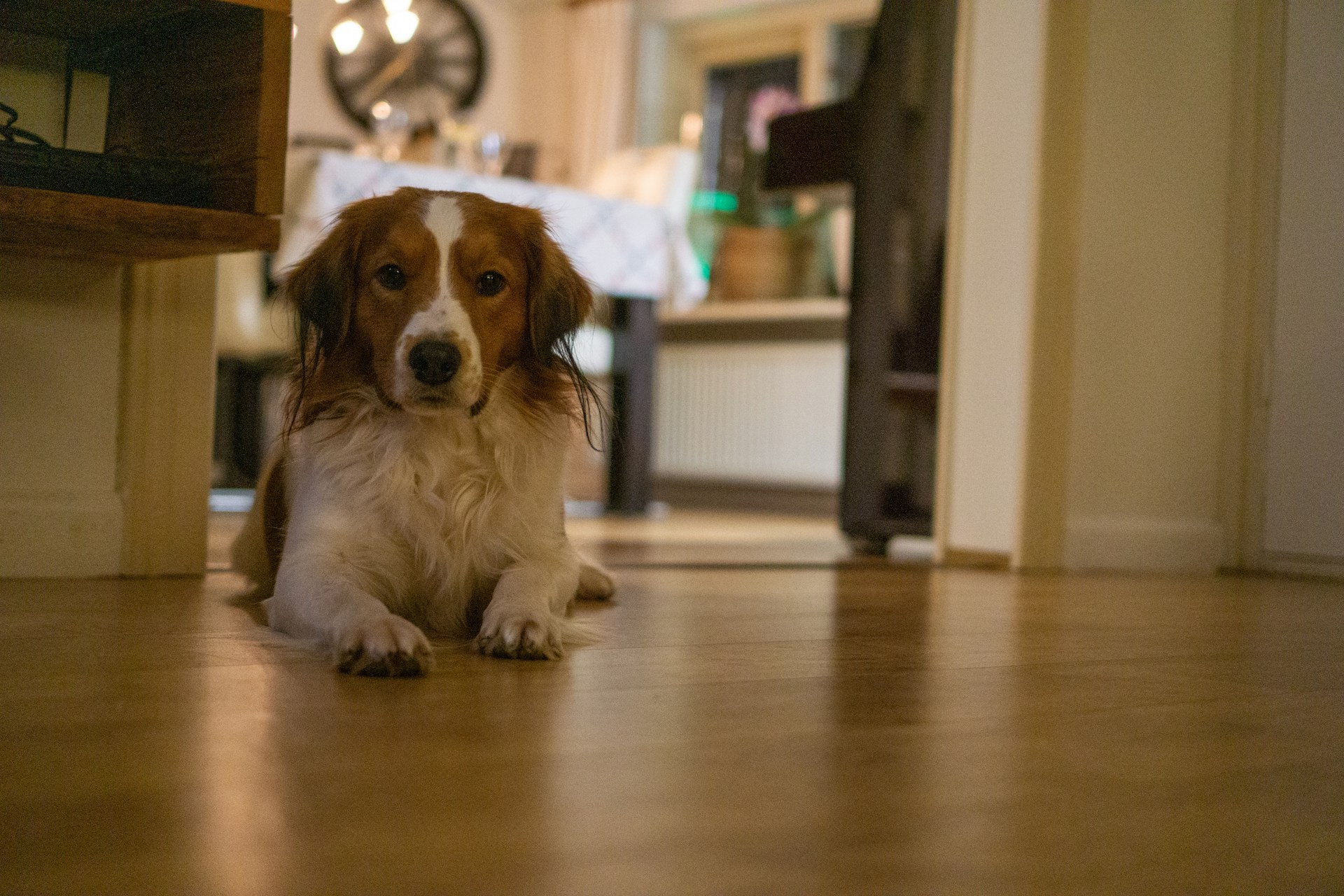
Your doorbell rings, and before your hand reaches the knob, your dog is already at the door, barking hard. A neighbor waves from across the street on your evening walk, and the same thing happens. When a dog barks at strangers, owners tend to ask one question: is my dog scared, protective, or just excited?
The most useful answer is to stop guessing and start watching. Notice where the barking happens, how close the person is, and what your dog's body is doing. Then practice at a distance where your dog can still pay attention to you. The same bark at the door and on the sidewalk can come from different feelings. The plan that helps also changes with the setting.
By the end, you will know what to look for before your dog reacts. You will also have ways to prepare for visitors and delivery people, and a plan for unfamiliar people on walks. You will also learn which signs mean it is time for individual help.
What to Notice When Your Dog Barks at Strangers
Start by collecting a few plain facts about each barking episode. Why dogs bark at strangers varies from dog to dog. If you have found yourself asking "why does my dog bark at everyone," the answer may be a mix of causes rather than one. The pattern of when and where it happens tells you far more than any single bark.
For one week, jot down short notes after each episode. Keep them simple:
- Where it happened: front window, doorway, yard, sidewalk, or a busy park.
- Who it was: a delivery driver, a guest, a jogger, a person in a hat, a child on a bike.
- How close they were: across the street, at the end of the driveway, inside the house.
- How it ended: the person left, your dog turned away, or you had to move your dog.
After a week, most owners spot something they had missed. Maybe the barking only happens when people walk toward the house. Maybe it starts when someone stops and stares.
Does the Setting Change Your Dog's Response?
Yes, and often a lot. Many dogs who bark nonstop at the front door walk past strangers in a park with little fuss. Others are calm at home but tense on narrow sidewalks where they cannot move away.
At home, some dogs seem to guard the house or the people in it. Dogs bark at people for many reasons, including excitement, frustration at not being able to greet someone, or worry about the person being there. Some dogs missed calm, positive experiences with unfamiliar people early in life, and that lack of early socialization can leave strangers feeling uncertain. A dog in the front yard may also be warning people to keep away from home.
On walks, the leash changes things. A fearful dog on a leash cannot choose to back away. That trapped feeling can turn a small worry into loud barking. An anxious dog at a window has a different problem: the stranger keeps passing, and the dog never learns that nothing happens.
So compare your notes by setting. If most barking comes from the window, managing the view is a quick first step. If it comes on walks, distance will be your main tool.
What Do Body Language and Distance Tell You?
Your dog's body usually shows you how it feels a second or two before the bark. Learn to read those early signs, and you get a chance to act before the noise starts.
Watch for two broad postures. A dog trying to look bigger stands stiff, with ears forward and a tail held high. A dog trying to look smaller crouches, flattens its ears, tucks its tail, licks its lips, or turns away. Many dogs show a mixture of both postures when they feel conflicted. A wagging tail on its own does not prove your dog is friendly.
Distance is the other clue. Ask yourself how far away the person was when your dog first stiffened or stared. That spot is your dog's comfort line for now. It is not fixed. A tired dog or a busy street can move it farther out.
If your dog mostly barks from behind you and backs up, it may be unsure. If it pulls forward with a loose, wiggly body, it may want to greet. Treat these as early guesses, and let the next few encounters confirm or change them.
How Can You Prepare Before Someone Gets Close?
Preparation happens long before the doorbell rings or a jogger appears. Your goal is to teach your dog a simple, rewarding habit when things are calm. Then you can ask for it when a stranger shows up. This is regular obedience training, practiced in real places.
Find a Distance Where Your Dog Can Still Pay Attention
Every dog has a distance where it can notice a person and still turn back to you. Trainers call this staying "below threshold." Work from there, and your dog can learn. Push past it, and your dog is too upset to take treats or hear its name.
Here is how to find that spot:
- Stand where your dog can see people at a comfortable distance, such as the far end of a parking lot.
- Say your dog's name once in a normal voice.
- If your dog looks at you, takes a treat, and stays loose, the distance is good.
- If your dog ignores food, stares, or barks, move farther away and try again.
Pay attention to how fast your dog turns back to you. Quick, relaxed turns over several tries suggest you can move a few steps closer next time. A slow turn or a grabby, hard take of the treat means stay put or back up. If your dog starts barking, that's okay. Calmly add distance until you get its attention back.
Start in quiet places, like your yard or a side street early in the morning. Busy downtown sidewalks come later.
Reward Attention and Practice Simple Cues
Once you know the right distance, reward your dog for looking at you. Positive reinforcement means giving your dog something it likes right after the behavior you want. Here, that behavior is checking in with you.
Two easy games help most dogs:
- The name game: Say your dog's name, then give a small treat. Repeat until your dog turns its head as soon as it hears its name.
- Look at me: Each time your dog glances at you on its own, praise it and give a treat. Once your dog does this often, add a word like "watch."
Use small, soft treats your dog loves, and keep the leash loose. A tight leash adds pressure, and pressure can make a worried dog more tense. A solid "stay" also helps at the door, so it is worth learning how to teach a dog to stay before you need it.
If your dog struggles with basic cues even at home, build those first. This overview of dog obedience training covers the skills that make stranger work easier. Research backs this gentle approach: reward-based methods produce higher obedience and more attentive dogs than force-based ones.
What Helps When Visitors or Delivery People Arrive?
The front door is often the hardest place to work, because the stranger shows up fast and close. The key is setting things up before the knock. You want to avoid making decisions in the middle of the noise.
Set Up a Calm Space Before Opening the Door
Pick a spot where your dog can relax away from the door. Good choices include a gated kitchen, a crate in a back room, or a bed behind a baby gate. Practice going there on cue when nobody is coming.
When you expect a visitor, try this routine:
- Before the guest arrives, send your dog to its space with a long-lasting chew or a food puzzle.
- Close blinds on the front windows if your dog tends to spot people coming up the walk.
- Turn on a fan or soft radio to muffle outside sounds.
- Open the door only after your dog is settled.
Delivery drivers are harder to plan for. If your dog barks at every truck, set a regular delivery spot away from the front door. You can also leave a note asking drivers not to ring. Then practice how to stop a dog from barking at the door with fake knocks. Knock on a table, reward your dog for looking at you, and slowly make the knock louder.
Watch how your dog responds. If it settles within a minute or two, the setup is working. If it keeps barking or scratching at the gate, move the space farther from the door.
Let Guests Follow Your Dog's Pace Without Forcing a Greeting
Once a guest is inside, let your dog decide if and when to say hello. A greeting is not the goal. A dog who watches from across the room and then goes back to its chew is doing well.
Give your guests a few simple rules before they come in:
- Ignore the dog at first. No eye contact, reaching, or talking to it.
- Sit down soon. A seated person looks less threatening than one standing over the dog.
- If the dog comes over to sniff, let it sniff, then let it walk away.
- Toss a treat away from yourself, so the dog can eat without getting closer.
If your dog approaches with a loose body, great. If it circles, barks, or backs off, it needs more room. Move it back to its calm space. Some dogs are shy with new people and need extra time; this guide on how to train a shy dog covers ways to support them. If you have a dog that barks at strangers only once they sit down or stand up, note that too. Movement inside the house is a common trigger.
How Do You Handle Unfamiliar People on Walks?
On walks, you have one big advantage: you control where you go. Use it. Plan your route and your spacing so your dog meets people at a distance it can handle.
This article is about people. If your dog also reacts to other dogs, that is a separate issue, covered in why a dog barks and lunges at other dogs.
Give Neighbors and Passersby More Room
The simplest way to stop a dog from barking at neighbors is to put more space between them. Cross the street. Step onto a driveway. Turn into a side road. Each move gives your dog room to look, breathe, and look back at you.
A few habits help on every walk:
- Scan ahead. Spot joggers, kids, and people with strollers early, before your dog does.
- Walk at quieter times. Early morning or later evening often means fewer surprises.
- Choose wide paths. Open trails give you more escape routes than tight sidewalks.
- Speak up for your dog. If someone wants to pet your dog, say, "We're training, thanks!"
When you pass someone, feed small treats as your dog notices the person. Stop treating when the person is gone. Over time, many dogs learn that strangers predict good things. If your dog barks at everything on walks, cut the walk shorter and pick calmer streets for a while.
What to Do If Barking Starts Before You Can Redirect
Sometimes a person pops out from behind a car, and your dog explodes before you can do anything. When that happens, your only job is to get out of the moment calmly.
- Stay quiet. Yelling adds noise and can make your dog more upset.
- Turn and walk the other way with a cheerful "let's go."
- Keep moving until your dog can glance at you or sniff the ground.
- Offer a treat once it can eat. If it won't take food, you need more distance.
Do not jerk the leash or scold. Harsh corrections tend to add fear. They can teach a dog that strangers mean trouble.
After the moment passes, think about what set it off. Was the person too close, too sudden, or wearing a hat or uniform? Use that detail to adjust your route or spacing next time. A dog that shakes it off in a minute is in a different place from one that stays wound up for the rest of the walk.
When Is Individual Help the Safer Next Step?
Get individual help when barking comes with signs that your dog, or someone else, could get hurt. It also makes sense if months of practice at home haven't changed much. Some behaviors are safer to work on with a professional dog trainer beside you.
Watch for Lunging, Growling, or Difficulty Recovering
When a dog barks at strangers, the barking by itself does not mean the dog is aggressive. Certain signs alongside it do call for a closer look:
- Lunging or charging at people, even without contact.
- Growling, showing teeth, or snapping.
- Freezing and staring hard at a person.
- Staying tense, panting, or unable to settle long after the person leaves.
- Biting or nipping, even once and even without injury.
Aggression often starts with warnings and can build if those warnings are ignored. Many dogs show warning signals before a bite, but those signals can be subtle, brief, or easy to misread. If your dog shows these signs, keep people at a safe distance. Do not let strangers pet it while you get help.
If your dog seems afraid and reacts with growling or snapping, this article on fear aggression in dogs explains more. For dogs whose reactions are already serious, some owners also involve a veterinarian or a dog behaviorist. Pain and illness can make a dog more reactive.
What an Individual Training Assessment Can Address
An individual assessment looks at your dog in the places where the problem happens. For barking at people, that usually means your front door, your yard, and your usual walking route. What a trainer sees there is often different from what shows up in a classroom.
A good assessment can help you with:
- Figuring out your dog's comfort distance and early warning signs.
- Choosing where your dog should be when guests or drivers arrive.
- Picking rewards that your dog cares about enough to work for.
- Getting everyone in the house to use the same cues and responses.
- Deciding whether a slow, careful plan like how to socialize an aggressive dog fits your dog.
Good one-on-one training also works with both ends of the leash. It shows you what to do with your timing, your voice, and your spacing, so progress continues between sessions.
Frequently Asked Questions
Why Does My Dog Bark at Some Strangers but Not Others?
Dogs often react to specific details, such as a person's size, speed, clothing, or the direction they approach from. Hats, uniforms, and people walking straight toward the dog are common triggers. Keep notes on who sets your dog off, and patterns usually appear within a week or two.
How Can I Stop My Dog From Barking at People Who Come to the Door?
Set up a calm space away from the door, and send your dog there before visitors arrive. Practice with fake knocks, and reward your dog for looking at you instead of the door. Let guests ignore your dog at first so it can settle at its own pace.
What Should I Do When My Dog Barks at Neighbors on Walks?
Add distance right away by crossing the street or turning onto a side road. Feed small treats while the neighbor is in view, then stop once they pass. Walking at quieter times helps your dog practice without too many surprises.
Is It Normal for a Puppy to Bark at Unfamiliar People?
Many puppies bark at new people while they figure out the world, especially when a stranger surprises them. Let your puppy watch people from a comfortable distance and reward calm looking. If the barking comes with hiding, shaking, or growling, get help early.
Does Barking at Strangers Mean My Dog Is Aggressive?
No, barking alone does not prove aggression, and it does not prove friendliness either. Look at the whole picture, including body language, distance, and how quickly your dog recovers. Growling, lunging, or snapping are signs to take seriously and work on with a professional.
Aim for Calmer Encounters, Not Forced Greetings
Success with a dog who barks at people looks like calm. Your dog notices a delivery driver and looks back at you. A guest sits on the couch while your dog chews a bone across the room. A neighbor passes, and your walk keeps going. Your dog never has to love strangers or let them pet it.
Go back to your notes from the first week. Pick the one setting where barking happens most, whether it is the window, the door, or a certain street. Work on that one place first, at a distance where your dog can still take a treat. Move closer only when your dog turns back to you easily.
If your dog still struggles after you have tried this, an individual in-home assessment can help identify your dog's triggers and build a plan that fits your home. Steve Good Dog offers one-on-one, in-home training across Central Connecticut, with online sessions available too. You can ask about in-home help for barking at strangers and describe what your dog does when strangers come near.
Personal dog trainer in Southington, Connecticut. Ten years of experience, more than 2,000 dogs trained, and a background training service dogs for Marines with PTSD.