
You ask your dog to stay, turn toward the front door, and before your hand reaches the knob, your dog is at your heels. Many owners read that as stubbornness. Often, the dog has simply learned that "stay" lasts until you move, because nobody has shown them what happens after that moment.
To teach a dog to stay when you walk away, start with a one-second stay, reward it while your dog is still in place, and then release them with a clear word before adding time, distance, and distractions one at a time. That order is a practical approach you can adjust to your dog. Knowing how to teach a dog to stay comes down to making each step small enough that your dog wins, then stretching it slowly.
I work with Connecticut dog owners in their own homes through Steve Good Dog. With the stay, your timing shapes the result as much as your dog's effort. By the end of this piece, you will know how to set up the first repetitions, how to add distance without your dog following you, and what to change when your dog gets up early.
Make the First Stay Last One Second
A good stay starts with a stay so short your dog is very likely to succeed. When you're working out how to teach a dog to stay, one second feels too easy to bother with, and that is the point. Some dogs can start a little longer, and some need even less. Your dog needs to learn that holding still pays off before you ask them to hold still for long.
Choose a Release Word Before You Begin
Pick your release word first, because the stay only has meaning if your dog knows when it ends. A release cue tells your dog they are free to move. Without one, your dog has to guess, and most dogs guess "now."
Good release words are short and rare in daily talk. Common choices include "free," "release," and "okay." One guide on teaching the stay and release cue warns that "okay" slips into normal speech so often that you may release your dog by accident.
When you choose, keep these points in mind:
- Pick a word everyone in the house will say the same way.
- Avoid words that sound like your dog's name or other cues.
- Use the word only to end a behavior, never as general praise.
- Say it in a calm, clear voice, with no excitement needed.
Before you add the stay cue at all, teach the release by itself. Ask for a sit, wait one second, hand over a treat, then say your release word. Take a step back or pat your leg so your dog gets up. After several rounds, watch for your dog to start moving on the word before you step. That shift suggests the release word is starting to mean something.
How to Teach a Dog to Stay for the First Few Seconds
Once the release word works, add the stay cue and keep the stay very short. A sit-stay is the easiest starting point for most dogs, since they already know sit.
- Ask your dog to sit.
- As soon as they sit, say "stay" once and show a flat palm, like a stop sign.
- Wait one or two seconds while standing still.
- Calmly give a treat while your dog is still sitting.
- Say your release word and let them move.
The verbal cue and hand signal work together at first. Later, many dogs respond to either one alone. Keep your dog treats small and soft, so your dog can eat fast and stay focused on you.
Watch your dog's body during those seconds. A dog who leans forward, shifts their front feet, or stares past you is close to breaking. When you see that, shorten the next stay and make it easy again.
Reward Your Dog Before Giving the Release Cue
Give the treat while your dog is still in position, then release. This is the detail that changes the most stays. If the treat comes after the release word, your dog learns that getting up is the fun part.
Staying still is boring for a dog. Positive reinforcement works by paying the behavior you want, so the payment has to land during the stay. If you use a clicker, click while your dog holds position, never as they move off. For more on why reward-based methods build this kind of trust, see positive reinforcement vs dominance training.
Pay attention to what happens after the treat. If your dog pops up right after eating, the stay has ended, so don't repeat the cue as if it were still on. Calmly reset, ask for the position again, and make the next repetition easier, with a shorter wait before the treat and release.
Build a Stay That Holds When Life Happens
A stay becomes useful at home when you build duration, distance, and distraction separately. Working in that order gives many dogs a clear path, but you can adjust it to fit your dog. Mixing all three too early is a common reason a stay falls apart, so add one new challenge at a time.
Add a Few Seconds While You Stay Close
Stretch the time first, while you stand right in front of your dog. Add a couple of seconds at a time. Three seconds, then five, then eight.
Once your dog holds for around 10 seconds, start giving treats several times during the stay. A treat every few seconds keeps the stay rewarding. Space them further apart as your dog settles in.
Many trainers use about 30 seconds of duration as a useful milestone before adding distance or distractions. Treat it as a guide, not a rule; some dogs are ready sooner, and others need longer. Mix short stays in with longer ones, too. If every stay gets longer, your dog starts to brace for a hard one.
Take One Step Away, Then Return to Reward
Distance comes next, and it starts with a single step. Here is where the front door problem from the start gets solved.
- Ask for the stay.
- Take one step back.
- Step right back to your dog and give a treat.
- Release them.
- Repeat, adding one step at a time.
Always walk back to your dog before you release. If you release from across the room, your dog learns that distance itself means "come here." Returning to reward also keeps the payment tied to staying.
Lower your time goal while you add distance. A dog who stays 30 seconds with you close may only manage a few seconds when you are three steps away. That is normal. Rebuild the time at each new distance.
Introduce Distractions One at a Time
Add distractions last and start with small ones. Clap your hands once. Shuffle your feet. Drop a sock on the floor. Each one is a new test, so bring your time and distance back down while you try it.
Your dog's reaction tells you what to do next. If they glance at the sock and look back at you, reward that. If they get up, the distraction may have been too big for now.
Match your rewards to the challenge. A piece of kibble may cover a clap, but a rolling ball calls for something your dog loves more. It helps to know that every dog has its own ranking of favorite rewards, so save the best ones for the hardest moments.
What Should You Do When Your Dog Gets Up?
When your dog breaks a stay, calmly reset them and make the next try easier. A broken stay is information. It shows you where your dog's limit is today.
Make the Next Repetition Easier Instead of Correcting Harshly
Skip the scolding and go back a step. Guide your dog back to the spot, ask for the stay again, and cut the time, distance, or distraction in half. Then reward a quick success.
Harsh corrections can make a dog nervous about the whole exercise. A worried dog often has more trouble holding still. Shy or sensitive dogs are easy to push past their comfort, so a softer pace helps; you can read more on how to train a shy dog.
Try to end each session on a win. If your dog breaks two stays in a row, do a very easy one, reward it, and stop. You will get a better start next time.
Check Whether Your Movement or Timing Invited Them to Follow
Look at your own body before you blame the dog. Your dog is used to following you. Stepping backward, leaning, or turning away fast can all look like an invitation to move.
Ask yourself a few questions after a break:
- Did I say my release word, or something close to it, by accident?
- Did I lean forward or bend down just before they moved?
- Did I wait too long between treats?
- Did I add distance and time on the same rep?
If your dog breaks at the same moment each time, like when you turn your back, practice that moment alone. Turn halfway, turn back, and reward. Build up to a full turn over several sessions.
Use Stay at Home Without Confusing Other Cues
Stay earns its keep in real moments at home, as long as each cue in your house has one clear job. Practice in the spots where you need it, and keep stay separate from similar cues.
Practice at Doors, During Greetings, and Around Daily Tasks
Bring the stay into your routine once it holds in a quiet room. Doors are a good place to start. Keep your dog on a leash or put a gate or barrier in place first, so an open door never depends on the stay alone. Ask for a stay, open the door a crack, close it, and reward. Open it wider over time.
Greetings are harder because people bring excitement. Ask a family member to walk in slowly while your dog stays a few feet from the door. Reward before your dog gets to say hello, then release them to greet.
Daily tasks work well too. Ask for a short stay while you set down the food bowl, carry in groceries, or clip on a leash. These small, repeated moments make the stay part of normal life. Owners working on broader house manners often find that dog obedience training ties these skills together.
How Are Stay, Lie Down, Leave It, and Come Different?
Each cue answers a different question for your dog. Keeping them clear stops your dog from guessing.
- Lie down asks for a position. It says nothing about how long to hold it.
- Stay means keep the position you are in until you hear the release word.
- Leave it means ignore that thing, like food on the floor.
- Come means move to you now.
A lie down and stay combines a position with a hold. Many dogs find a down-stay more comfortable for longer periods. Come works on its own, and you do not need a perfect stay before you practice recall training.
Avoid calling your dog out of a stay with "come" while you are still teaching it. That blurs the two cues. Walk back, reward, and release. If you want a dog who can hold a stay far from you outside, that ties into how to train a dog off leash.
When Could One-on-One Training Help?
A professional dog trainer helps when your dog keeps breaking at the same point and you cannot tell why. Sometimes the fix is a small change in your hands, your posture, or your timing that is hard to see yourself.
In-home, one-on-one sessions let a trainer watch your dog in the real places where the stay falls apart, like your front hall or kitchen. That makes the advice fit your house. It also helps when several family members use the cue in different ways.
New puppy owners often benefit from a guided start. You can also browse these puppy training tips for first-time owners for more ideas on building early habits.
Frequently Asked Questions
How Do I Teach My Dog to Stay While I Walk Away?
Build the stay to around 30 seconds with you close, or whatever your dog handles comfortably, then add one step back at a time. Return to your dog to reward before each release. Lower your time goal whenever you add distance.
Should I Start With a Sit-Stay or a Down-Stay?
Most owners start with a sit-stay because dogs learn sit early. A down-stay is often easier for longer holds since your dog is more relaxed. Try both and use whichever your dog holds more calmly.
Can I Teach My Dog to Stay Without Treats?
Yes, you can use toys, praise, or a favorite game as rewards. Treats make early training faster because you can deliver them quickly during the stay. Many owners fade treats slowly once the stay is solid.
Why Will My Dog Stay in the House but Not Outside?
Outside brings smells, sounds, and movement your dog has not practiced around. Treat outdoors as a new level and go back to short, close stays there. Use higher-value rewards to compete with the outdoor world.
How Do I Teach My Dog to Wait Until I Say the Release Word?
Always give the treat during the stay and release afterward, so staying pays more than moving. If your dog gets up early, reset calmly and try a shorter stay. Keep your release word rare and consistent across the household.
Give Your Dog a Clear Way to Succeed
A reliable stay grows from small wins and clear signals. Your dog learns that holding still earns rewards and that a single word ends the job. When you walk away, your dog stays because every step so far has made sense.
That front door moment from the start changes when you add one step at a time and always walk back to reward. When your dog breaks, you make the next try easier and check your own movement. Those two habits carry most owners a long way.
If your dog still follows you every time you step away, a session in your own home can show you where the stay breaks down. You can ask about in-home obedience training, describe what your dog is doing, and book a time that fits your week.
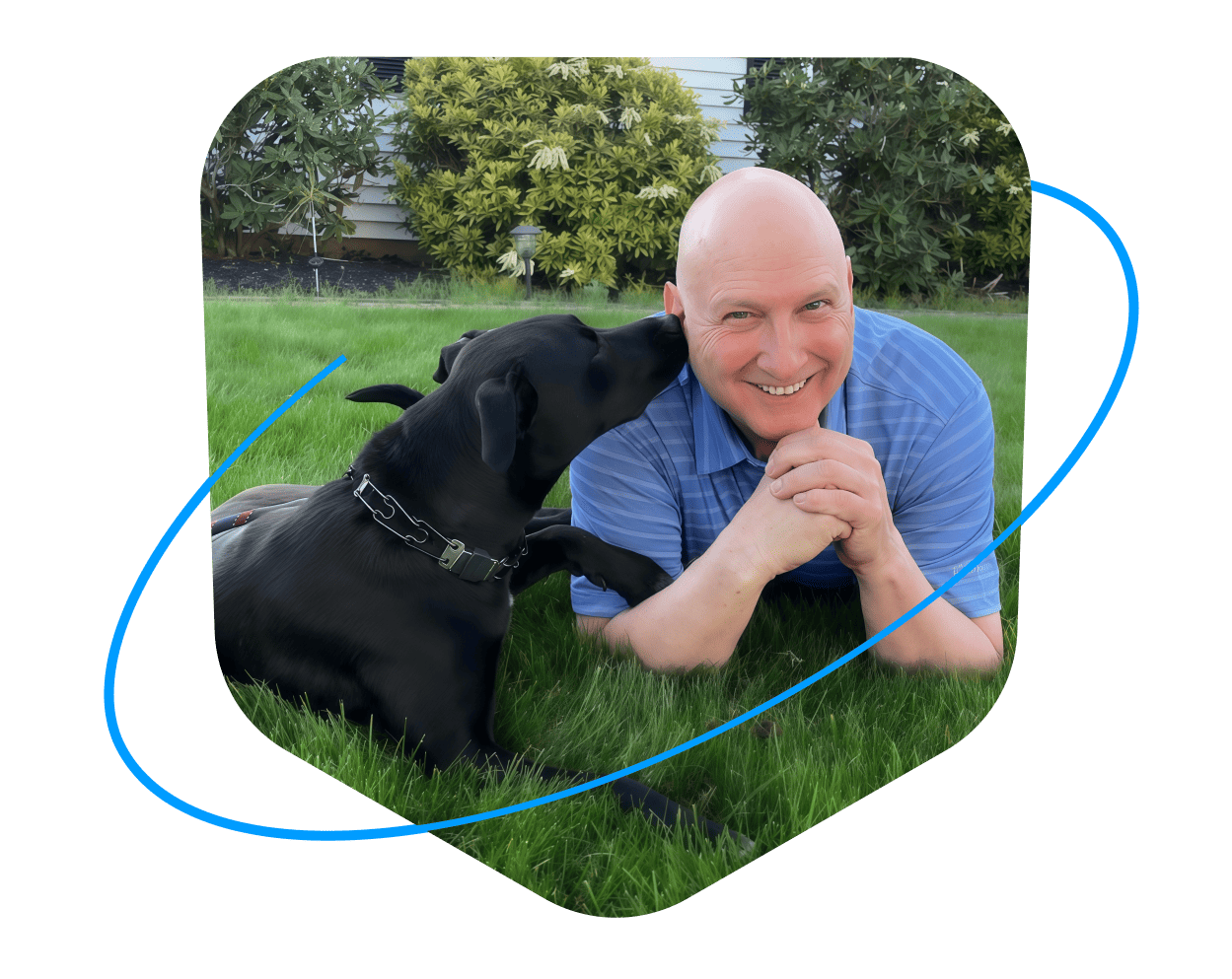
Personal dog trainer in Southington, Connecticut. Ten years of experience, more than 2,000 dogs trained, and a background training service dogs for Marines with PTSD.