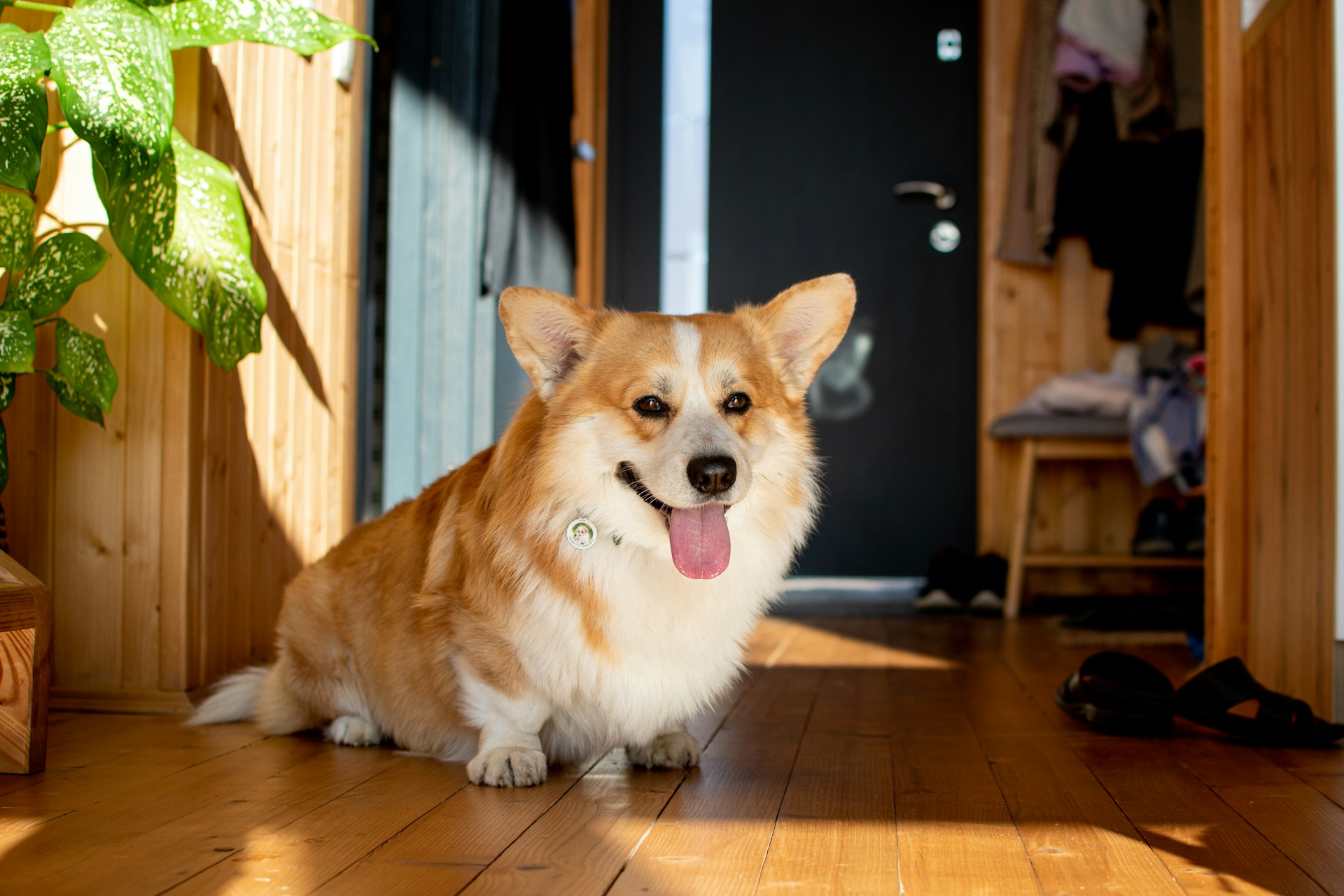
The front door opens, a guest steps into the narrow hallway, and your dog backs toward the wall. The guest bends down with a friendly hand out. Your dog freezes, then growls. Maybe it ends there, or maybe it ends with a snap. Fear aggression in dogs is a defensive reaction: a dog that wants a scary thing to go away turns to growling, snapping, or biting, often when retreat feels impossible or unlikely to work.
That hallway moment holds a key idea. Many frightened dogs would choose to leave if they could. Once a leash, a corner, a crate, or a person's hands take that option away, the dog's choices shrink. What looks like a sudden attack is often the end of a longer chain of signals that nobody saw.
By the end, you will be able to spot the signs earlier and lower the pressure in the moment. You will also know how to start building safer experiences, and how to recognize when your dog needs a professional assessment. Bite risk is real, so every step here puts safety first.
What Happens When a Dog Cannot Get Away?
When escape is blocked, a frightened dog shifts from trying to leave to trying to make the threat leave. Animals and people both prefer to get away from something scary. When that fails, many switch to defending themselves. The ASPCA describes how a fearful dog may become aggressive if cornered or trapped, even though her first choice was to retreat. Escape doesn't have to be physically impossible, though. Some fearful dogs react when leaving doesn't seem to work, or even move toward the threat defensively.
"Trapped" covers more situations than most owners expect. A leash counts. So does being held, being pinned under a table, or being cornered on the couch. A dog near a family member, food, or a favorite spot may also feel it has to stay put and defend, which is one way fear can overlap with guarding or territorial behavior.
Why Might a Frightened Dog Growl or Snap?
A growl or snap is the dog's attempt to create distance. It works like a loud "back off" when quieter signals failed, even when the person approaching means well.
Fear-based aggression often changes over time. Early on, a dog might bark while backing away. If the scary thing keeps coming, the dog may learn that lunging forward works better. What looks like a bold dog charging ahead is often the same frightened dog, now using a stronger tool.
Scolding adds to the problem. A dog punished for growling may stop growling, but the fear stays. That dog can skip the warning next time and go straight to a bite.
What Are the Signs of Fear Aggression in Dogs?
The signs of fear aggression in dogs vary, and dogs don't follow a predictable sequence. Some show several early signals; others skip steps or show them in a fraction of a second. Watch for these signals:
- Stiffening or freezing in place
- Ears pinned back or turned to the side
- Lip licking, yawning, or panting when not hot or tired
- Whale eye, where you see the whites of the eyes
- Tucked tail or a low, slow wag
- Leaning away, turning the head, or trying to hide
- Raised hair along the back
Stronger signals can follow if pressure continues: growling, showing teeth, snarling, snapping, and biting. A single signal does not prove fear. A dog licking its lips may simply have eaten. Look at the whole picture: what just happened, how close the trigger is, and whether the dog can move away. Even a wag needs context.
What Can Make a Dog Feel Threatened?
Almost anything a dog finds scary can trigger a defensive reaction. The causes of fear aggression in dogs fall into a few common groups. Your dog's list will be personal, and it may change over time.
People, Other Dogs, and Unwanted Approaches
Direct approaches are a common trigger. Many dogs find these actions uncomfortable, even from people they know:
- Bending over the dog
- Reaching for the head or collar
- Hugging or restraining
- Staring straight at the dog
- Petting while the dog is lying down or asleep
A dog scared of strangers may also react to people who look unusual. Hats, sunglasses, uniforms, big bags, or an uneven walk can all change how a person reads to a dog. If you often ask why your dog is aggressive towards strangers, notice whether it happens with everyone or only with certain looks or movements. Some fearful dogs react mostly with sound; this article on why a dog barks at strangers covers that pattern.
Other dogs can trigger the same response, especially on a leash. The leash removes the chance to move away or greet at a comfortable angle.
Confined Spaces, Sudden Sounds, and Pain
Tight spaces raise the stakes. Think back to the hallway guest. A narrow hall, a crate, a spot under the bed, or a gap between furniture gives a dog nowhere to go. If a dog went there to hide, reaching in adds even more pressure.
Loud noises and fast movement matter too. Joggers, skateboards, trash trucks, and a guest who stands up suddenly can all startle a dog into a reaction.
Pain belongs on this list as well. A dog with a sore hip or ear may snap when touched in that area. If the reactions started recently, a vet visit comes before anything else.
How Early Experiences and Temperament May Play a Role
Genetics, early life, and learning all shape how fearful a dog becomes. Limited puppy socialization can leave some dogs unsure about new people, places, and sounds. Some dogs are born more cautious than their littermates. A frightening event, like being rushed by a loose dog, can also leave a lasting mark.
Try not to assume a rescue dog was abused. A dog that seems scared of everything may simply have missed calm exposure at a young age, or may have a naturally sensitive temperament. You rarely need the full backstory to help. What you need is a clear record of what your dog reacts to today.
What Should You Do When Your Dog Reacts?
Managing fear aggression starts with lowering the pressure in the moment. Aggression in dogs rises when a threat keeps coming. Your first job is to create space, not to teach a lesson.
Create Distance Without Forcing an Interaction
When your dog starts to show fear signals, move away from the trigger. Turn and walk the other direction, step behind a parked car, or calmly ask a visitor to stop approaching. If you are the trigger, step back and give your dog room.
Avoid these common mistakes:
- Pulling your dog closer to "say hi"
- Letting a guest keep reaching after a growl
- Scolding or yanking the leash
- Holding the dog still so someone can pet it
Watch how your dog responds after you add space. If your dog's whole body softens, you likely gave enough distance; taking a treat on its own doesn't prove your dog is comfortable. If your dog is still stiff and staring, you need more. That distance is useful information for a professional plan later.
Manage Visitors and Walks to Reduce Bite Risk
Avoidance is the safest plan until you have qualified help. The Merck Veterinary Manual explains that every time a dog becomes aggressive, it learns aggression may help it cope, which reinforces the problem.
For visitors, set your dog up before the doorbell rings. If your dog presents a bite risk, use secure separation that fits your dog and household. Common options include a closed room with a chew or a sturdy gate your dog can't get past. A leash held by an adult is not the same as a barrier. Ask guests to ignore the dog completely: no eye contact, no reaching, no bending down. Children should never take part in exposure practice or be asked to manage the dog. Keep visits short.
On walks, pick quieter routes and times. Give wide space to other dogs and people. Keep treats ready so you can turn away and reward your dog for moving with you. If your dog has already bitten, this guide on how to stop a dog from biting covers safety steps in more detail.
How Can You Help Your Dog Feel Safer Over Time?
A dog feels safer when scary things show up at a distance it can handle, followed by something good. This slow work changes how your dog feels about a trigger, so the growl has less reason to appear.
Notice Patterns in Distance and Body Language
Start a simple log for one or two weeks. After each reaction, jot down:
- What the trigger was
- How far away it was when your dog first noticed it
- The first sign you saw
- Where you were (hallway, sidewalk, car)
- What helped your dog settle
Patterns appear fast. You might find your dog handles men at 30 feet but not at 10. Or your dog may be fine outside but reacts in the narrow front hall. These details tell you where to practice and where to keep managing.
Pair Manageable Encounters with Positive Experiences
Counterconditioning means linking a trigger with something your dog loves, so the trigger starts to predict good things. When aggression is involved, this work should be planned with a qualified professional. In a typical plan, the trigger appears at a distance where your dog notices it but stays relaxed. A high-value treat follows, and when the trigger leaves, the treats stop.
The professional guiding the plan decides if and when anything changes. Those decisions rest on your dog's overall body language across many sessions, not on eating a treat or looking loose once. Moving closer or greeting is not a required outcome; comfortable distance can be the goal.
Keep sessions short and end on a calm note. Fearful dog training moves at the dog's pace, and some triggers take a long time. A strong base in dog obedience training, such as a reliable "look" or hand target, gives your dog something clear to do. Cues like these can help with management, but they don't make a dog safe or resolve fear on their own. Broader work like how to build confidence in a dog and how to socialize an aggressive dog has its own guides.
When Is an Individual Assessment Needed?
Some cases need a vet or a qualified professional to look at your dog in person. Canine aggression carries real injury risk. A plan built for your dog and home is safer than trial and error.
Have a Veterinarian Check Sudden or Escalating Behavior
See your vet if the aggression started suddenly or keeps getting worse. The same applies if your dog reacts to touch in one area or seems stiff, sore, or off in other ways. Pain, thyroid problems, and other medical issues can all lower a dog's tolerance.
For complex or severe cases, a veterinary behaviorist is a vet with advanced training in behavior. That specialist can diagnose problems and prescribe medication when it fits. This article on dog trainer vs. behaviorist explains how these roles differ.
Get Qualified Help for Bites or Hard-to-Avoid Triggers
Reach out for help if your dog has bitten, or if a snap came close to a child. Do the same if the trigger lives in your home or is hard to avoid. Examples include a new baby, a roommate, or a busy street you must walk every day.
A professional who comes to your home sees the real hallway, the real front door, and the real routine. Everyone in the household can then learn the same plan, which cuts down on mixed signals for the dog.
Why Similar Reactions Can Have Different Causes
A growl at the door can come from fear, but it can also come from something else. Territorial aggression centers on protecting a place like the yard or car. Resource guarding centers on food, toys, or resting spots. Redirected aggression happens when a dog cannot reach one target and turns on a nearby person or dog.
Each of these calls for a different plan. That is why it helps to avoid labeling your dog from one event. A careful look at context, timing, and body language sorts out what is going on.
Frequently Asked Questions
Can a Dog Be Scared of Strangers and Still Approach Them Aggressively?
Yes. A frightened dog may move toward a stranger while barking or lunging to drive that person away. This often develops when quieter signals like backing up did not work in the past.
Does Growling Mean My Dog Is About to Bite?
Growling is a warning that your dog is uncomfortable, and it can come before a bite. Stop what is happening and add space right away. Never punish a growl, because a dog that learns to hide warnings can bite with little notice.
Why Is My Dog Aggressive Toward Other Dogs Only on Walks?
The leash limits your dog's ability to move away or greet at a comfortable angle, which can make it feel trapped. Frustration or excitement can also play a part. Watch the distance where reactions start and give more room on your next walk.
Can Fear Aggression Improve With Training?
Many dogs improve with careful management and gradual, professionally guided practice. Progress depends on the dog, the triggers, and how steady the household is. Some dogs will always need management around certain situations.
When Should I Ask a Veterinarian About My Dog's Behavior?
Call your vet if the aggression is new, sudden, or getting worse, or if your dog reacts to being touched. Pain and illness can lower tolerance. Your vet can rule these out or refer you to a veterinary behaviorist.
Give Your Dog Space, Then Make a Plan
A dog that growls in a hallway or snaps at a reaching hand may be telling you it feels stuck. Guarding, pain, or other causes can look similar, though. Your first move is to give that dog a way out: more distance, fewer approaches, and no punishment for warnings. Then you can start noticing patterns and building safer experiences at a pace your dog can handle.
If your dog is still struggling, one-on-one help in your own home can make the next steps much clearer. Steve Good Dog works with Central Connecticut families on fear, reactivity, and aggression, teaching owners how to read and respond to their dogs. You can ask about in-home help for fear aggression and describe what your dog is doing. You can also call (860) 266-5566 to find out how Steve would approach it.
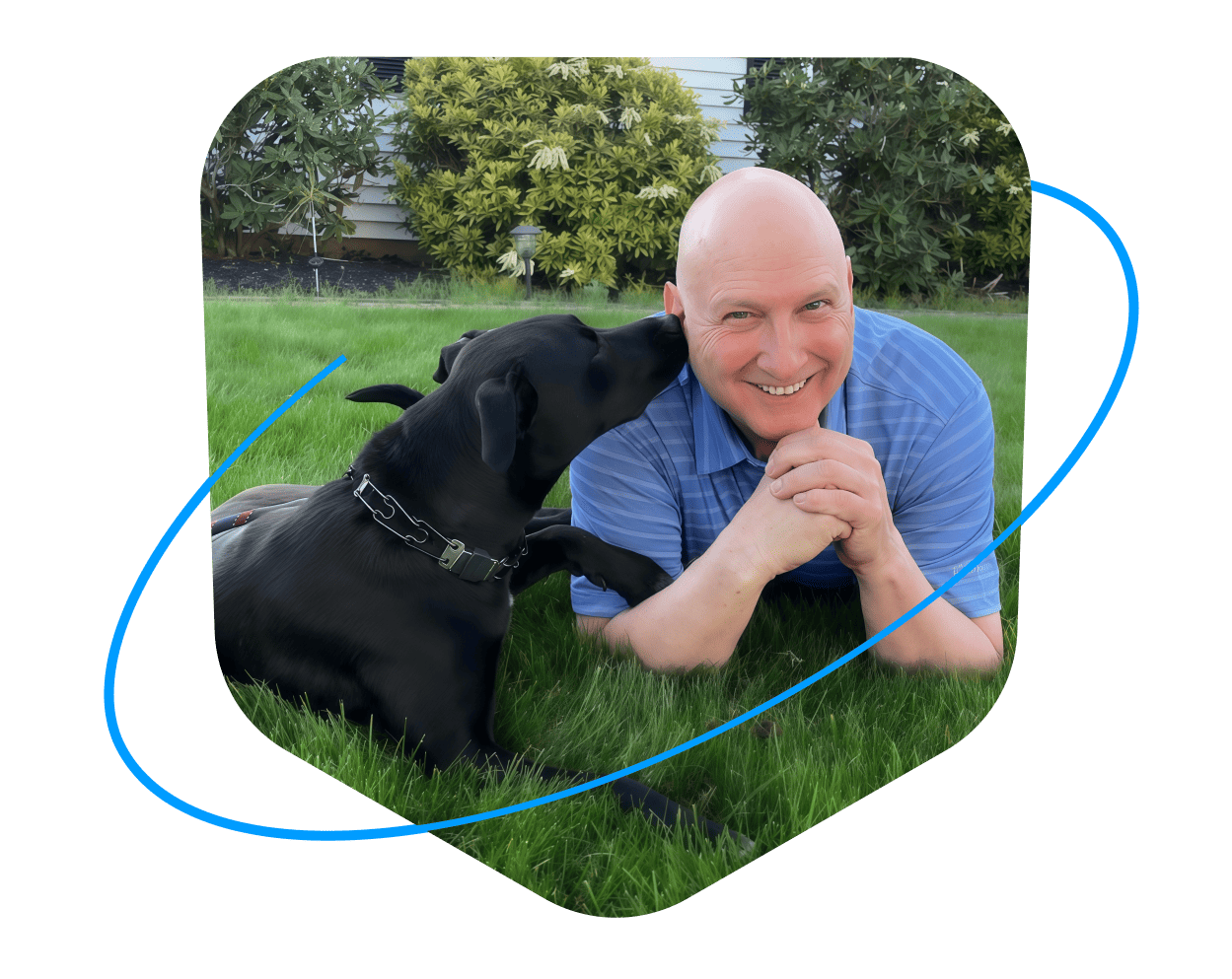
Personal dog trainer in Southington, Connecticut. Ten years of experience, more than 2,000 dogs trained, and a background training service dogs for Marines with PTSD.