
You are halfway down a familiar street, your dog sniffing a mailbox, when another dog rounds the corner. Two seconds later your dog is barking and straining at the end of the leash. The neighbor pulls their dog away, and you stand there embarrassed, wondering where that came from.
If you are asking "why does my dog bark and lunge at other dogs," here is the short answer: most dogs who do this are reacting to strong feelings they cannot manage on a leash, such as fear, frustration at not being able to greet, or overexcitement, and the distance to the other dog shapes how big the reaction gets. The same explosion can come from very different places. A scared dog and a dog who is desperate to say hello can look almost identical from the other end of the leash.
That is why the outburst itself tells you less than the moments before it. Once you learn to spot what your dog does as another dog appears, you can start making choices on the next walk that keep your dog calmer. You will also have a clearer sense of when this is something to work on yourself and when it needs a trained eye.
What Might Be Driving the Reaction?
Barking and lunging usually grow out of one of a few feelings, and many dogs have a mix. Dog behavior experts call this pattern leash reactivity. It describes what the dog does, and it says nothing yet about why. Reactive dogs are not bad dogs; they are dogs who get overwhelmed by something ordinary.
Fear, Distance, and Feeling Unable to Leave
A frightened dog would often prefer to move away from another dog. The leash takes that choice away. When a dog cannot escape, making the other dog leave becomes the next best plan, and loud barking with a big forward lunge does that job well.
Veterinary behavior guidance notes that fearful dogs can become aggressive when they cannot escape, including when they are leashed or cornered. It also names poor socialization, inherited temperament, past punishment, and learning as contributors. Undersocialized dogs who missed calm early meetings with other dogs sometimes fit this picture.
Distance plays a big part here. A fearful dog may cope with a dog across a wide field and fall apart when the same dog appears ten feet away. If your dog's reactions get larger as space shrinks, keep that in mind. You can read more about how this develops in this guide to fear aggression in dogs.
Excitement and the Frustration of Not Being Able to Greet
Some dogs love other dogs and cannot stand being held back from them. Trainers call this a frustrated greeting. The dog sees a possible friend, pulls to reach them, hits the end of the leash, and the excitement boils over into barking, whining, and spinning.
These dogs often have a loose, bouncy body before the leash tightens. Their tail may swing wide and fast, though a wagging tail alone does not prove friendliness. If you want to read the tail more carefully, look at it in context with the rest of the body.
Frustration and fear can overlap. A dog may start out excited, get stuck, and then feel stressed by the tension and the noise.
Why Does My Dog Bark and Lunge at Other Dogs Only on Leash?
A leash changes the whole conversation between two dogs. Off leash, dogs usually approach in curves, sniff from the side, and move apart when they need a break. On leash, sidewalks and tight spaces often lead to straight, head-on approaches, which many dogs find uncomfortable. You can still create curves and distance with the leash on by stepping aside, crossing the street, or arcing around the other dog.
The leash also limits your dog's options. A tight leash can tilt a dog's body forward and keep them from moving away. So when owners ask why their dog is fine at daycare but barks and lunges at other dogs on walks, the setup is often part of the answer. Taking the leash off is not a treatment, though, or a safe way to test your dog.
Does Lunging Mean My Dog Is Aggressive?
Lunging alone does not tell you your dog is aggressive, and it does not rule it out either. Dog aggression covers a range of warning behaviors. A list of warning signs from the ASPCA's guide to aggression includes going still and rigid, a threatening bark, and lunging with no contact. More serious steps include snarling, snapping, and biting.
Many dogs who lunge never go further. Others do. What matters is the whole picture: how often it happens, how close the dogs get, and whether there has ever been contact. If you are wondering whether your dog is aggressive towards other dogs on walks, the next section will help you gather useful clues. For dogs with clear aggression, a dedicated plan for dog aggression towards other dogs is the right next step.
What Happens Before the Barking Starts?
Many reactions have a lead-up you can learn to see, sometimes lasting a few seconds or more. Others come with signs so subtle or brief that they are hard to catch. The answer to "Why does my dog bark and lunge at other dogs?" often shows up in those moments before the bark. The quiet signals you can spot tell you when to act.
Notice Distance, Staring, Stiffness, and Changes in Attention
Watch your dog closely from the moment another dog comes into view. Common early signs include:
- A hard stare that locks onto the other dog and will not break
- A body that goes still or stiff, often with weight shifted forward
- Ears pricked hard forward or pinned back, and a closed mouth
- Ignoring you, including treats they would normally grab
- Pulling harder, or sudden slow, stalking steps
- Hair rising along the back or shoulders
Pay attention to the distance where these signs first appear. That is your dog's current comfort line. If your dog stays loose, takes treats, and checks in with you at 60 feet, but stiffens and stops eating at 30 feet, you have learned something useful.
A dog who can still sniff, eat, and turn toward you is usually coping better. When those things stop, your dog is likely too stressed for useful practice, and the goal becomes getting out calmly.
Look for Patterns Across Dogs, Places, and Recent Experiences
One reaction is a single data point. Five reactions start to show a pattern. Keep a short note on your phone after each walk. Write down the type of dog, the distance, the location, and what your dog did before and after.
Over a week or two, questions start to answer themselves. Does your dog react to large dogs, fast dogs, or dogs who stare back? Is it worse near your house, at narrow spots, or at the end of a long walk? Did a scary meeting or a loud day happen recently?
Some dogs react more when they are tired, sore, or already stressed from something else. This kind of record also helps a trainer or veterinarian later. It gives them facts about your dog instead of guesses.
How Can You Make the Next Walk More Manageable?
Preventing reactions you can see coming is one of the most useful steps toward calmer walks. Repeated reactions can make the pattern more practiced and the feeling behind it stronger, so fewer rehearsals give training a better chance.
Create Space Before Your Dog Reacts
Space is your best tool on day one. Cross the street, step onto a driveway, or move behind a parked car when you see a dog ahead. A visual barrier can help as much as extra feet.
A few changes that make space easier to find:
- Walk at quieter times or on wider streets
- Skip narrow trails and busy dog parks for now
- Use a secure, well-fitted harness to help you manage your dog if they lunge
- Keep a relaxed leash and a steady pace; avoid yanking
If your dog stays loose and curious when you add space, you picked a good distance. If they still stiffen, you need more room next time.
Practice an Emergency U-Turn Away from Other Dogs
An emergency U-turn is a cheerful, practiced cue that means "we are turning around right now." Teach it at home first, long before you need it outside.
- Walk with your dog in a quiet spot. Say a happy cue like "Let's go!"
- Turn around in the other direction and toss a treat ahead of your dog's nose.
- Repeat until your dog spins with you as soon as they hear the cue.
- Practice in the yard, then on quiet streets, then with a dog far away.
Once the turn is smooth, use it the moment you spot a dog too close. If your dog turns easily, you probably caught it early. If they freeze and refuse, the other dog was likely already too near, so start farther away next time.
Avoid Forced Greetings and Punishment
Letting a reactive dog "just say hi" to fix the problem often backfires. A nervous dog gets pushed past its limits, and an overexcited dog learns that pulling works.
Punishment carries its own risks. Veterinary guidance explains that harsh corrections during a lunge, like choke or prong collars, can build a new fear response toward the thing the dog was reacting to. Your dog may start linking other dogs with pain. A calm voice, space, and a quick exit protect the trust between you. Reward-based dog obedience training can also build the cooperation that makes these moments easier.
What Can Help Beyond the Next Walk?
Longer-term change comes from teaching your dog to feel differently about other dogs, one small step at a time. Trainers call this desensitization and counterconditioning. In plain terms, you show your dog other dogs at a distance they can handle, and you pair each sighting with something great. If your dog has bitten, redirects onto people or pets, or you cannot safely control them, plan this work with a qualified professional.
Reward Calm Attention at a Comfortable Distance
Classical counter-conditioning means the sight of a dog starts to predict good things. Find a spot where dogs pass at your dog's comfort distance. When your dog notices a dog, feed a small, tasty treat. When the other dog leaves, the treats stop.
With repetition, many dogs start to glance at the dog and then look back at you for their reward. Relaxed look-backs over many sightings can suggest the new link is forming. A hard stare, stiffening, or refusing food often means the distance is too close for now.
Calm skills at home help too, such as rewarding your dog for staying settled on a mat. Building steady relaxation can also support building confidence in a dog who worries easily.
Build Skills Gradually Rather Than Pushing Closer
Progress comes from small changes, one at a time. Move a few feet closer only after several calm sessions at the current distance. Change just one thing per session, such as distance, the type of dog, or the location.
Expect bad days. If your dog reacts, back up to the last easy distance and keep the next few sessions easy. This slow pace is also the base for learning how to socialize a reactive dog, covered in more depth in how to socialize an aggressive dog. Dogs who also bark at people often benefit from the same approach; see why a dog barks at strangers.
When Is Individual Help Important?
Some situations need more than home practice, and getting help early often makes the work easier. A professional dog trainer or dog behavior consultant can watch your dog in real life and see signals you might miss.
Get a Veterinary Check for a Sudden Change
A dog who was relaxed around other dogs and suddenly starts reacting deserves a vet visit first. Pain and other health problems can play a part.
Sore joints, ear problems, thyroid issues, and vision or hearing loss can all make a dog more touchy. Bring your walk notes to the appointment. If a medical issue turns up, treating it may change how your dog handles training.
Seek Support for Bites, Escalating Reactions, or Walks You Cannot Manage Safely
Reach out for one-on-one help if any of these apply:
- Your dog has bitten or made contact with another dog or person
- Reactions are getting bigger, closer, or more frequent
- You cannot physically hold your dog during a lunge
- Your dog redirects onto you or another pet when frustrated
- Walks feel so stressful that you avoid them
In-home sessions let a trainer see your real street, your real leash habits, and your real dog. That makes the advice fit your life. When you contact a trainer, describe what happens before, during, and after a reaction, using the notes you kept.
Frequently Asked Questions
Why Does My Dog Bark at Some Dogs but Not Others?
Dogs notice size, speed, posture, and how the other dog moves or stares. A dog barreling straight at yours feels different from one ambling past at a distance. Your walk notes will show which features set your dog off.
Can a Dog That Lunges at Other Dogs Just Want to Play?
Yes, some dogs lunge because they are frustrated that the leash stops them from greeting. A loose, wiggly body before the leash tightens often points that way. Excitement can still tip into stress, so handle it with the same care as other reactions.
Why Does My Dog Bark on Leash but Seem Fine Off Leash?
A leash limits your dog's choice to move away or approach in a natural curve, and a tight leash adds physical pressure. Many dogs cope well with freedom and struggle with that restriction. That doesn't make off-leash meetings a safe test; you can create curves and distance with the leash on.
What Should I Do if Another Dog Approaches Before I Can Turn Away?
Put distance first: turn and move away at a steady pace, and use a parked car, fence, or other physical barrier if one is close. Ask the other owner to call or retrieve their dog. Do not put yourself between the dogs if they are within biting range.
How Long Does It Take to Improve Barking and Lunging on Walks?
It varies with the dog, the cause, and how often reactions still happen. Some owners see easier walks within weeks of adding space and practice, while others need months. Steady, patient practice and fewer rehearsed reactions help the most.
A Better Walk Starts with Noticing the Pattern
The dog who exploded at the corner was not acting out of nowhere. There may have been a stare, a stiffening, or a moment where treats stopped mattering, even if it was too quick to catch. Once you know those signs, you can turn away earlier, keep more space, and give your dog easier wins.
Start small this week. Track three or four walks, find your dog's comfort distance, and practice the U-turn at home. Watch how your dog responds, and let that guide how fast you move.
If your dog is still struggling, a session in your own neighborhood can bring the picture into focus. Steve Good Dog offers one-on-one in-home training across Central Connecticut, with a 1.5-hour starting session at $250. You can ask about in-home help for leash reactivity and describe what your dog is doing on walks.
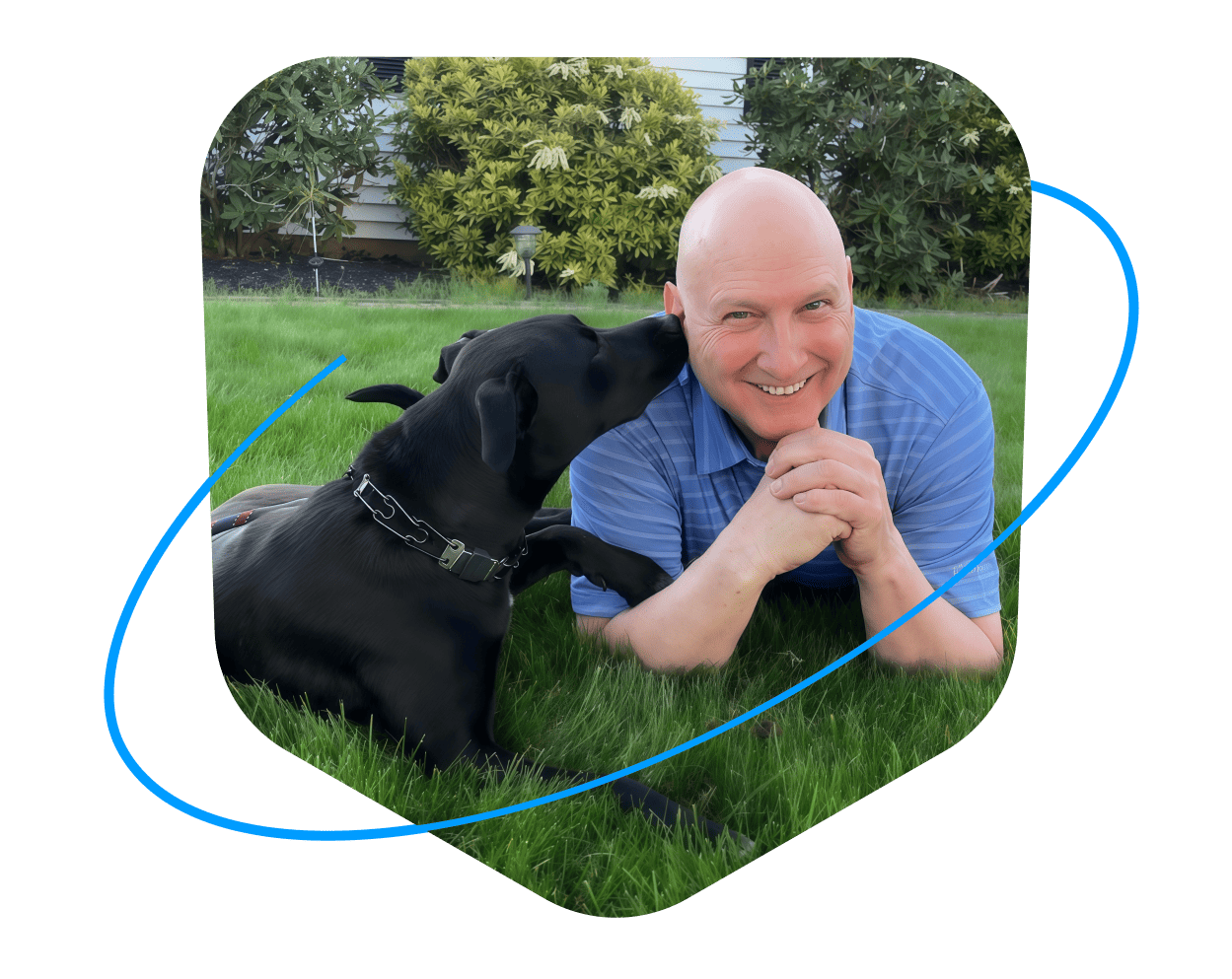
Personal dog trainer in Southington, Connecticut. Ten years of experience, more than 2,000 dogs trained, and a background training service dogs for Marines with PTSD.