
The first time you unclip the leash, your dog usually decides the outcome in about three seconds. A squirrel moves, a jogger passes, or a new smell drifts in. In that moment, you find out whether your dog sees you as part of the fun or as the thing that ends it. That split second is why so many owners who search for how to train a dog off leash end up chasing a happy, deaf dog across a field.
The safest way to build off-leash freedom is in stages: solid basic skills first, then a fenced area, then a long line in new places, with the leash staying on anywhere your dog is not yet ready. Each stage asks a little more of your dog. It also gives you honest information about what your dog can handle before you ask for more.
This article helps you judge your own dog's readiness, practice the right skills at a distance, and move forward based on what your dog shows you. You will also know what to do if things go wrong. Some dogs earn full freedom on quiet trails, and some do best on a long line for life. Both are good outcomes when the dog stays safe.
Is Your Dog Ready for More Freedom?
Your dog is ready for more freedom when the skills you need already work on leash, in real settings, with real distractions. If those skills only work in the kitchen, the dog is not ready yet. That is useful information, and it tells you where to practice next.
Which Skills Should Work Before You Unclip the Leash?
Off-leash freedom sits on top of basic obedience training. If you are still building that base, a structured plan for dog obedience training is the place to start. Before you unclip, look for these skills to work on leash in at least a few different places:
- Loose-leash walking. Your dog can walk near you without constant pulling.
- A dependable come. Your dog turns and heads back when called, without you repeating the cue five times.
- Sit or down at a distance. Your dog can stop and hold still a few feet away from you.
- Leave it. Your dog can look away from food, a toy, or a smell when you ask.
- Voluntary check-ins. Your dog glances back at you on walks without being asked.
Watch how your dog responds, and not only whether they respond. A slow, curving return with lots of sniffing stops is a skill still in progress. A quick, happy turn toward you is a skill you can start to build on.
What Happens When Something More Interesting Appears?
The real readiness test is what your dog does when the world competes with you. Try this on a regular leashed walk. When your dog notices a bird, a dog across the street, or a dropped sandwich, say their name once in a normal voice.
Then watch closely. Does your dog glance back within a second or two? Do they ignore you until the thing passes? Or do they lean into the leash and lock on? Each answer points to a different next step.
If your dog turns back, reward it well and keep practicing around bigger distractions. If your dog freezes and stares, add distance and try again from farther away. If your dog pulls hard or cannot take food at all, that distraction is too much for now. That is a place where you keep the leash on.
Do Breed Tendencies Change the Readiness Check?
Breed tendencies change what "more interesting" looks like, but they do not replace watching your own dog. A Labrador Retriever or Golden Retriever was bred to work near people and bring things back. Many of them enjoy staying close, yet the same dogs will often charge a pond or a picnic without a second thought.
An Australian Shepherd or Border Collie may stay near you and watch every move. That focus can switch in a flash to moving bikes, running kids, or wildlife. Scent hounds and some terriers can follow a smell with total focus and seem to lose track of you.
Use breed as a heads-up for which distractions to test. Then judge your individual dog by what they do. A mixed-breed rescue with an unknown past needs the same careful check as any purebred.
Build the Skills Your Dog Needs at a Distance
Distance changes everything, so each skill needs practice at five feet, then fifteen, then thirty. A dog that comes from across the living room may not come from across a yard. The full step-by-step recall lesson lives in this guide to recall training. Below, the focus is on how those skills fit into off-leash work.
Practice Coming Back Without Turning Every Return into the End of Fun
A reliable recall depends on what your dog has learned coming back predicts. If every recall command ends play, clips on the leash, or leads to a bath, your dog learns to avoid it. Many dogs that ignore a recall cue have simply learned that coming back ends something good.
Try these habits to keep your recall cue strong:
- Call your dog, reward generously, then send them back to play with a release word like "go sniff."
- In a secure enclosure, clip the leash on and off several times during a session, so the leash stops meaning "we're leaving."
- Never call your dog for something they dislike, such as nail trims. Go get them instead.
- Keep a separate emergency recall word for real danger, and pair it only with your dog's favorite food.
Watch the speed of each return. If your dog starts coming back faster and happier, you can add a little more distance. If returns slow down, make it easier again and raise the value of the reward.
Teach Stay, Leave It, and Regular Check-Ins
Recall brings your dog back, but stay and leave it prevent problems before they start. A solid stay helps you pause your dog before a trail crossing, though it never replaces a leash near roads or crossings. If your dog breaks a stay the moment you step away, this guide on how to teach a dog to stay walks through building it slowly.
Leave it helps with dropped food, dead animals, and anything else on the ground. Start with a treat under your shoe. Then move to a treat on the floor, and then to items on walks.
Check-ins are the skill owners forget. Every time your dog looks back at you on their own, mark it with "yes" and reward. Over a few weeks, many dogs start checking in more often. That habit keeps your dog tracking where you are when no leash connects you.
Keep Rewards Clear as Distractions Increase
As the world gets louder, your rewards need to get better. Positive reinforcement means your dog gets something they want right after the behavior you like. The American Veterinary Society of Animal Behavior states that evidence supports reward-based methods for all canine training. If you want to know why this beats punishment, see this comparison of positive reinforcement vs. dominance training.
In practice, rank your dog's rewards from okay to best. Kibble may work in the living room. Outside, you may need small bits of chicken, cheese, or a short game of tug. Save the very best reward for the hardest moments, like coming away from another dog.
If your dog stops taking treats, that tells you something. They may be too excited, worried, or distracted to work right now. Add distance or go somewhere calmer before you ask for anything more.
Move from Enclosed Practice to a Long Line
Off-leash dog training moves forward in small steps, from a secure fenced space to a long line in new places. Each step keeps a safety net in place while your dog learns to choose you.
How to Train a Dog Off Leash for the First Time in a Fenced Area
A fully fenced area your dog knows well is the right spot for the first unclip. Walk the fence line first and check for gaps, loose boards, or open gates. Pick a quiet time when no other dogs or people are around.
Keep the first session short, around five to ten minutes. Let your dog explore, call them a few times, reward, and release them again. Mix in a sit, a short stay, and a leave it. Here, learning how to train a dog off leash is mostly about learning to read your dog's choices without the leash doing the work.
End while your dog is still coming back happily. If they ignore you in this easy setting, they are not ready for more space. Go back to leashed practice for a while.
Use a Long Line Before Adding Distance and Distractions
A long training leash gives your dog room to roam while you keep a safety net. Many owners use a line of 15 to 30 feet, attached to a well-fitted harness rather than a neck collar. Skip retractable leashes, which pull on the dog constantly and can hurt your hands.
Long line recall training works best when the line stays loose. In unenclosed areas, keep hold of it, gathering or letting out slack as your dog moves, rather than letting it drag until danger appears. Avoid stepping abruptly on a line attached to a running dog, wrapping it around your hand, or letting it tangle around legs. Letting the line drag belongs only in a suitable, secure enclosure where you are watching closely. If you use the line to reel your dog in, they learn that the line brings them back and not their own choice.
Watch for patterns. Does your dog stay within a certain range on their own? Do they come right away in open grass but not near the tree line? Those details show you where to practice more before the line comes off.
Test New Places Without Assuming One Good Return Is Enough
One perfect recall in a new park proves your dog can do it once. It does not prove they will do it every time. Dogs often learn skills tied to one place, so a dog that nails recall at home may seem to forget it on a trail.
Before you trust a new setting, try your dog on the long line there across several visits. Try different times of day, since a trail at 7 AM feels very different from the same trail on a Saturday afternoon. Keep a simple note of how many calls your dog answered quickly.
When your dog comes back fast nearly every time, over several visits, you have useful information. That alone doesn't approve an open trail, though. The space also has to allow off-leash dogs and keep your dog away from traffic, wildlife, livestock, and people or dogs who don't want company. If they miss calls once a new smell or sound shows up, that place stays a long-line place for now.
Choose the Right Space and Know When to Keep the Leash On
The right space is one where off-leash dogs are allowed and your dog can't easily reach roads, wildlife, or strangers. Keeping the leash on is a smart choice in many places, even for well-trained dogs.
Check Leash Laws and Look for Secure Practice Spaces
Never assume a park allows off-leash dogs. Leash laws differ by town, state park, and even by trail. Many parks in Connecticut and across the country require leashes, so check posted signs and the town or park rules before you unclip.
Good places to practice include:
- Your own fenced yard, once you have checked it for gaps
- A friend's fenced yard your dog has visited before
- A secure, privately rented fenced space
- Fenced tennis courts or ball fields, where the rules allow dogs and the space is empty
Private, fenced rentals are a strong option for dogs that struggle around other dogs. You control who is there, and your dog can run without surprise meetings. Save open off-leash adventures for later, and only where they are legal.
What Should You Do If Your Dog Runs Away?
If your dog runs away when off leash, stay calm and avoid chasing. Chasing often turns into a game, and your dog runs faster. Try these steps instead:
- Call once in a happy voice, using your emergency recall if you have one.
- If you can do it safely, and it won't draw your dog toward a road or other hazard, move away, clap, or crouch down. Many dogs follow movement away from them.
- Shake a treat bag or squeak a toy to catch their attention.
- When your dog comes back, reward and praise them, even if you feel scared or upset.
Punishing a dog that finally returns teaches them that coming back is a bad idea. If your dog is truly lost, act fast. The ASPCA advises making sure your dog always wears a collar with an ID tag and keeping microchip details current. It also recommends calling local shelters, animal control, and vets right away.
Avoid Common Mistakes and Reassess Around People or Other Dogs
Most off-leash training mistakes come from moving too fast. Common ones include going off leash after one good day, calling your dog over and over when they are ignoring you, and practicing only in one place. Another is letting your dog run up to other dogs or people who did not invite it.
Other people and dogs deserve extra care. A friendly dog racing toward a leashed dog can cause a scary moment for both. If your dog barks, lunges, or stiffens near other dogs, read why a dog barks and lunges at other dogs before you plan any off-leash time near them.
The same applies to people. If your dog barks at or rushes strangers, see this guide on when a dog barks at strangers. A professional dog trainer can help you judge where your dog stands when you are unsure.
Frequently Asked Questions
Where Should I Let My Dog off Leash for the First Time?
Start in a fully fenced area your dog already knows, like your own yard or a friend's yard. Walk the fence first to check for gaps. Choose a quiet time with no other dogs or people around.
How Do I Stop My Dog from Running Away When off Leash?
Go back to a long line and make coming to you more rewarding than anything else in that setting. Use your dog's favorite treats, release them back to play after each return, and never punish them for coming back. Keep the leash on in places where they have run off before.
What Age Can I Start Preparing a Puppy for Off-Leash Training?
You can start building the skills as soon as your puppy comes home. Reward name responses, check-ins, and short recalls indoors. Age alone doesn't make a dog ready, so save unclipping in open spaces until those skills hold up outside, it's legal, and the area is suitable. Some dogs should always stay physically contained.
How Do I Teach My Dog to Stay Near Me Without a Leash?
Reward every time your dog checks in or chooses to stay close, starting in a fenced space. Change direction often so your dog learns to keep track of you. Over time, many dogs build a natural range around their owner.
What If My Dog Listens in the Yard but Not on a Trail?
That is normal, because dogs often learn skills tied to one place. Practice on a long line on that trail across several visits, using better rewards and more distance from distractions. Consider unclipping only when your dog answers reliably there over many visits and off-leash dogs are allowed. There should also be no foreseeable access to traffic, wildlife, livestock, or unwilling people and dogs. Some dogs should stay on a line.
Give Your Dog the Freedom They Can Handle Safely
Off-leash freedom is earned one place and one distraction at a time. Every stage tells you something about your dog. A dog that chooses you around squirrels, joggers, and other dogs may be ready for more, in the right places. A dog that locks on and tunes you out is telling you to keep the line on and keep practicing.
A long line is a good outcome. Many dogs live full, happy lives exploring at the end of a 30-foot leash, and they get to sniff and run more safely for themselves and everyone else.
If your dog still bolts, ignores you outside, or struggles around other dogs, a one-on-one session in your own home and neighborhood can help. Steve Good Dog works with you and your dog where the problems happen, so you learn what to practice between visits. You can ask about in-home help with off-leash training and describe what your dog is doing, and he can explain how he would approach it.
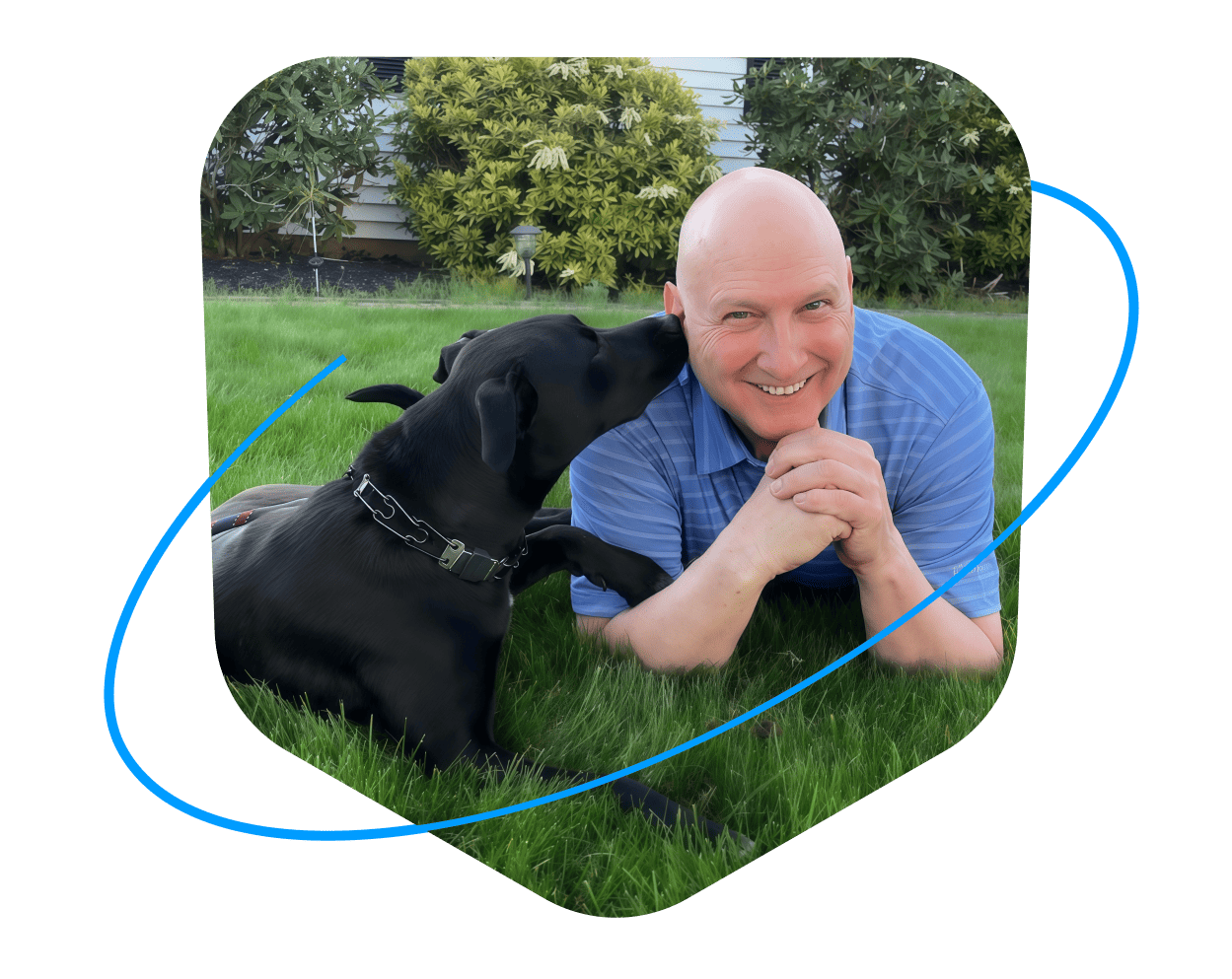
Personal dog trainer in Southington, Connecticut. Ten years of experience, more than 2,000 dogs trained, and a background training service dogs for Marines with PTSD.