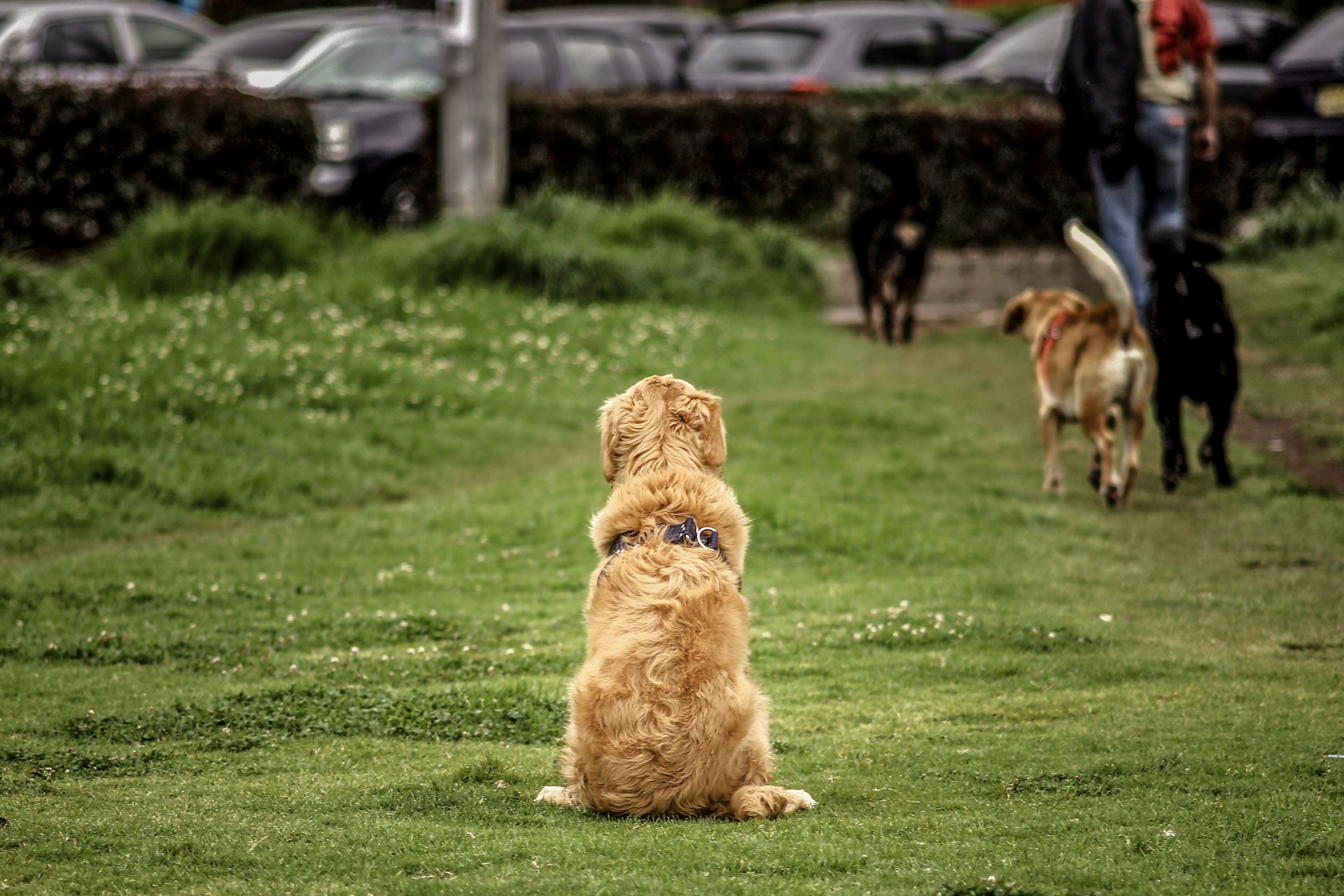
A walk ends with your dog lunging at a neighbor's dog, and now you are replaying the moment. Was that growl a warning? Was the snap meant to connect? Most owners in this spot want the same thing: fewer scary moments and a daily routine that feels safe again. Effective training for dog aggression toward other dogs starts with a careful assessment of where, when, and why the reactions happen, then builds a gradual plan that keeps every dog at a safe distance while your dog learns calmer responses.
Growling and snapping are forms of communication. They tell you a dog feels a need to create space or protect something. The hard part is that the same growl can come from fear, frustration on a leash, pain, or guarding a toy. Each of those calls for a different plan. That is why it helps to look at the dog in context before choosing exercises.
At Steve Good Dog, the work happens one-on-one in your home, where your dog's real routines play out. By the end of this piece, you will know what to do right after a confrontation, what an assessment looks for, and what realistic progress looks like. You will also know when a veterinarian or veterinary behaviorist belongs on the team.
What Should You Do After a Confrontation?
Your first job after a confrontation is to keep everyone safe and prevent a repeat, not to figure out the cause on the spot. The hours and days after an incident shape what your dog expects next time. A calm, managed routine gives you a clean starting point for training.
Create Distance and Prevent Another Unsafe Encounter
Distance is your most useful tool right now. If your dog lunged at another dog on a walk, change your routes and walk times so you meet fewer dogs. Pick quiet streets, early mornings, or open spaces where you can see dogs coming from far away.
Here are practical steps for the next few weeks:
- Walk where you can turn around. Avoid narrow sidewalks and blind corners where dogs appear suddenly.
- Skip dog parks and on-leash greetings. Every close meeting is a chance for another bad experience.
- Use a well-fitted harness or flat collar and a standard leash. Avoid retractable leashes, which make distance hard to control.
- Keep dogs apart at home if the fight happened there. Use baby gates, closed doors, or crates on a rotating schedule.
- Write down what happened. Note the place, time, the other dog, and what your dog did before the reaction.
Be careful about stepping between fighting or aroused dogs. Redirected aggression happens when a dog is blocked from its target and turns on whoever interfered. The Merck Veterinary Manual describes redirected aggression as behavior the dog can actively aim at the person or dog tied to the interruption. Reaching for collars during a fight is how many owners get bitten.
Watch how your dog responds to the new routine. If your dog relaxes on quieter walks, that suggests distance helps. If your dog stays on alert even with no dogs in sight, share that detail with whoever assesses your dog.
When a Bite or Sudden Behavior Change Calls for Immediate Help
Some situations need help before any training begins. Get your dog and any injured people seen quickly if dog bites broke skin on a person or another dog. Puncture wounds on dogs can look small and still become infected under the fur.
Call your veterinarian soon if any of these apply:
- The aggression started suddenly in a dog who was relaxed around other dogs before.
- Your dog seems stiff, sore, or reluctant to be touched in certain spots.
- Fights at home are getting more frequent or more intense.
- Your dog attacks on sight, with little or no warning.
Pain and illness can lower a dog's tolerance, so a vet check rules out medical factors. For dogs living together, a study of 305 dog pairs with in-home aggression linked bites that broke skin and attacks on sight with poorer outcomes. The researchers urged fast behavior help for those pairs. If that sounds like your home, move quickly. For guidance on managing a dog after a bite, see my article on how to stop a dog from biting.
What Does an Assessment Look for?
An assessment looks for patterns in dog behavior. One incident rarely tells the whole story. A good assessment gathers details from your history, watches your dog in normal routines, and looks at how your dog's body changes before a reaction. Nobody needs to stage a close encounter to learn this.
Where, When, and Around Which Dogs Does It Happen?
Context is the first layer. Dog-on-dog aggression that only happens on leash points somewhere different than dog-to-dog aggression that shows up at home, off leash, or behind a fence. Your notes from the past few weeks become very useful here.
Useful questions include:
- Does it happen on walks, in the yard, at the window, or with a dog in your household?
- Is it all dogs, or only certain ones, such as large dogs, puppies, or dogs of the same sex?
- How close was the other dog when your dog first noticed it?
- What time of day was it, and was your dog tired, hungry, or already excited?
- What did you do right before and right after?
Short phone videos help a lot. They show the small signals you might miss in the moment, like a freeze, a hard stare, or a closed mouth.
How Do Aggression, Leash Reactions, and Fear Overlap?
Leash reactivity, fear, and aggression can overlap, so it helps to think of them as layers rather than separate boxes. Leash reactivity is a broad term for big reactions on leash. Frustration-based reactivity shows up in dogs who want to reach the other dog and get upset when the leash stops them. The same dog can also feel afraid, or move from frustration into aggression. Even if your dog has greeted some dogs politely off leash, that doesn't make it safe to test an off-leash meeting.
Fear can look different. A fearful dog may back up, lower its body, tuck its tail, or bark while retreating. If the other dog keeps coming, that same dog may start lunging forward to make the threat leave. Lack of socialization during puppyhood can play a part, but many fearful dogs had decent early lives.
You can read more about why a dog barks and lunges at other dogs and about fear aggression in dogs. Body language before the lunge is often the clearest clue. Read the whole body, since a wag on its own is not always friendly.
Could Pain, Guarding, or a Past Encounter Play a Part?
Aggression in dogs often has more than one layer. A dog with sore hips may snap when another dog bumps into it. A dog who guards toys or food may be relaxed on walks but tense at home. Territorial behavior can show up at the fence line or front window even in a dog who ignores dogs elsewhere.
Past encounters count too. A dog who was rushed or attacked by an off-leash dog may now react to any dog that approaches head-on. None of this can be confirmed from one moment, so repeating patterns matter more than any single incident. If a pattern points to pain, a vet visit comes before further training.
From Assessment to Safer Everyday Encounters
Once the patterns are clear, the plan focuses on changing how your dog feels about other dogs and giving your dog better choices. Progress happens at a distance your dog can handle, and any change in that distance follows your dog's responses and professional guidance.
What Does Training for Dog Aggression Toward Other Dogs Involve?
Good training for dog aggression toward other dogs combines management with behavior modification. Management means arranging life so your dog avoids reactions. Behavior modification means gradually changing the dog's emotional response and teaching new habits.
Most plans use a few proven tools:
- Desensitization: Your dog sees other dogs at a distance that causes mild interest, not a reaction. The distance changes very slowly.
- Counter-conditioning: Seeing another dog predicts something your dog loves, like a special treat. Over time, the sight of a dog starts to feel good. Some trainers write this as counterconditioning; it means the same thing.
- Positive reinforcement: Your dog earns rewards for calm choices, like looking at you, sniffing the ground, or turning away.
- Clicker training (optional): A click marks the exact moment your dog does something right. A short word like "yes" works too.
Clear foundation skills make all of this easier. A reliable name response, a hand target, and a quick U-turn cue give you ways out of tight spots. If those are shaky, dog obedience training builds them. Harsh corrections tend to backfire with aggressive dogs, and many owners see their dogs get worse after punishment-based methods.
How Can You Practice Without Forcing Close Greetings?
You can make real progress without your dog ever meeting another dog nose to nose. Close greetings are the riskiest part of dog encounters. They are also optional for a happy life.
After an assessment, a qualified professional may plan practice sessions like the example below. Treat it as a picture of what guided work can look like, not a plan to start on your own:
- Find a spot where dogs pass at a distance, like the far edge of a large park.
- Stand where your dog can notice dogs but still take treats and respond to you.
- Each time a dog appears, feed a treat. When the dog leaves, the treats stop.
- Keep sessions short, around 5 to 10 minutes, and leave before your dog gets tired.
Parallel walks may come later, set up and supervised by the professional guiding your plan. The trainer chooses a suitable dog and handler, keeps both dogs far apart, and decides if and when the gap changes. If either dog stiffens or stares, the distance grows again. For more on this gradual approach, see my guide on how to socialize an aggressive dog.
Your dog's responses help guide the next step. Refusing food, freezing, or a hard stare often signals that the situation is too close or too much. Noticing a dog and then looking back at you is usually a better sign. Read these signals together with the rest of your dog's body language.
What Does Meaningful Progress Look Like?
Meaningful progress looks like smaller, shorter, rarer reactions, not a dog who loves every other dog. Many dogs will always need some management. That is a fair outcome.
Signs things are moving in the right direction include:
- Your dog notices dogs at the same distance but recovers faster.
- Your dog looks to you after spotting a dog.
- Reactions are less intense at your usual distance, and your dog's behavior is safer overall, judged across many walks rather than one.
- You feel calmer on walks because you know what to do.
Progress is rarely a straight line. A bad day after a good week is normal. If setbacks keep happening in the same spot, that is useful information for adjusting the plan.
How Does the Plan Change at Home?
When the tension is between dogs who live together, the plan shifts from distance on walks to structure inside the house. Shared spaces, valued items, and household habits become the main focus.
Managing Shared Spaces, Food, and Toys
Resource guarding is a common spark for fights at home. In the clinical sample of dog pairs mentioned earlier, resource guarding was the most common fight trigger. It was involved in 72.8% of those pairs. That figure describes the dogs in that study, not dogs in general, but it shows how often guarding can play a part. Food, chews, toys, beds, and even a favorite person can all be guarded.
Practical changes that lower tension:
- Feed dogs in separate rooms or crates, and pick up bowls when meals end.
- Give long-lasting chews only when dogs are apart.
- Remove any toy that has caused a squabble.
- Give each dog its own bed, and teach each dog to go there on cue.
- Watch doorways and hallways, where dogs crowd each other.
Territorial behavior at windows or fences can also spill over onto the other dog. Two dogs barking at a passerby can turn on each other. Blocking window views with film or moving furniture helps cut that buildup of excitement.
Helping Everyone in the Household Respond Consistently
Dog aggression at home gets harder to manage when family members react differently. One person yells, another laughs, a third lets the dogs work it out. Dogs pick up on that inconsistency.
Agree on a short set of house rules every adult follows:
- Which adult feeds which dog, and where.
- Which items stay put away.
- What cue each adult uses to call a dog away from tension.
- What to do if dogs start to stiffen: calmly call one away, never grab collars.
Keep children out of handling, feeding, and managing the dogs involved. Adults take on those jobs, and children stay safely apart from tense moments. Training the people in the home is as important as training the dogs. One-on-one, in-home sessions help here because everyone can practice together in the rooms where problems start.
When Is Professional Support the Safer Choice?
Professional support is the safer choice once aggression involves injuries, frequent fights, or reactions you cannot predict. It also helps when your efforts are not working after a few weeks. An outside view catches details owners miss.
What Can a One-on-One, In-Home Trainer Assess?
An in-home trainer sees your dog in its real setting. That means the front window, the hallway where dogs bump each other, the spot where meals happen, and your usual walking route. A trainer can watch how your dog moves through a normal day and how each family member handles the leash.
From there, a trainer can:
- Spot early warning signals and teach you to read them.
- Set up a management plan that fits your home.
- Build a step-by-step training plan at your dog's pace.
- Coach you on timing, leash handling, and rewards.
Steve Good Dog offers private sessions across Central Connecticut, including Southington, Cheshire, Meriden, and Bristol. Remote sessions are also available if you prefer. If you are weighing options, this breakdown of a dog trainer vs. behaviorist explains the differences.
When Should You Ask About a Veterinary Behaviorist?
A veterinary behaviorist is a veterinarian with advanced training in behavior who can diagnose medical factors and prescribe medication. A certified dog behaviorist without a veterinary degree can help with training plans, but cannot prescribe.
Ask your vet about a referral when:
- Your dog has caused serious injuries to another dog or a person.
- Aggression came on suddenly or keeps escalating.
- Your dog seems anxious much of the day, not only around dogs.
- Your dog cannot settle enough to learn, even at a big distance.
Medication does not replace training. For some dogs, it lowers anxiety enough that training can start working. A trainer and veterinary team can work side by side.
Frequently Asked Questions
Can Dogs That Have Fought Live Together Safely?
Many can, with solid management, separate feeding, and a training plan. Pairs with skin-breaking bites or attacks on sight face a harder road and need professional help quickly. Some homes use permanent rotation so both dogs stay safe.
Should I Let My Dog Greet Other Dogs During Training?
No, not early on. Close greetings are the riskiest part of encounters, and your dog can make progress at a distance. Greetings, if they ever happen, come much later with a calm, known dog and only as part of a plan with a qualified professional.
Can Food Guarding Cause Fights Between Dogs at Home?
Yes, guarding food and other valued items is a common trigger for fights between housemates. Feeding dogs apart and picking up chews and toys lowers the risk. A trainer can help you work on the guarding itself.
How Do I Know Whether My Dog Is Afraid of Other Dogs?
Look for backing away, a lowered body, a tucked tail, lip licking, or turning the head away when a dog approaches. Some fearful dogs lunge forward once retreating does not work. Videos of several encounters give a clearer picture than one moment.
When Should I See a Veterinary Behaviorist for Dog Aggression?
See one if aggression started suddenly, is escalating, or has caused serious injuries. It also makes sense if your dog seems anxious most of the day. Start with your regular vet, who can rule out pain and make a referral.
A Safer Routine Is a Worthwhile Goal
Think back to that walk that ended in a lunge. The aim is not to force your dog into friendships. It is a routine where you can see trouble early, create space, and trust your dog to handle the dogs you do meet.
That kind of routine comes from knowing your dog's patterns, managing the risky spots, and practicing at a pace your dog can handle. You also become a more confident handler along the way, which is often what changes walks the most.
If growling, snapping, or fights are part of your week, a personalized session in your own home is a good next step. You can ask about in-home help for dog-to-dog aggression, describe what your dog is doing, and find out how a plan would start.
Personal dog trainer in Southington, Connecticut. Ten years of experience, more than 2,000 dogs trained, and a background training service dogs for Marines with PTSD.